THEMATIC SESSION #03
XR and Measurement Systems for Forensic Reconstruction and Evidence Analysis
ORGANIZED BY
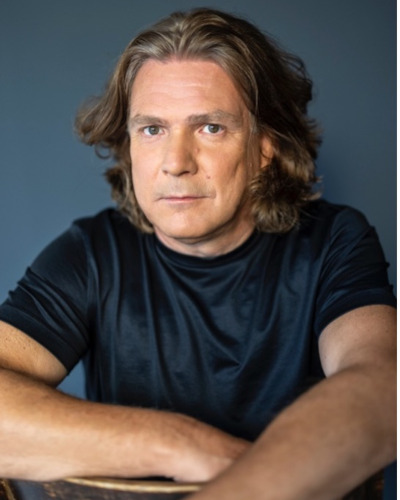 Dirk Labudde
Dirk Labudde
Mittweida University of Applied Sciences, Germany
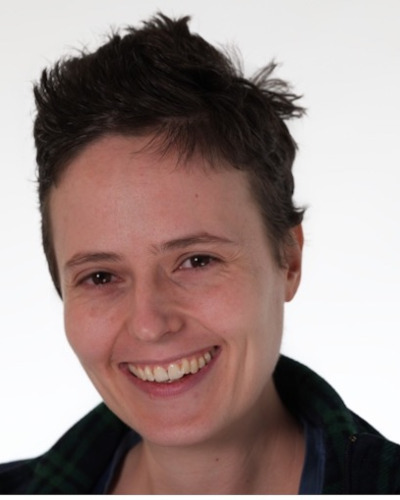 Marie Luise Heuschkel
Marie Luise Heuschkel
Mittweida University of Applied Sciences, Germany
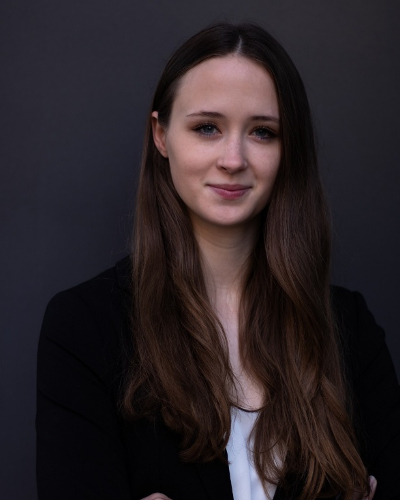 Svenja Preuß
Svenja Preuß
Mittweida University of Applied Sciences, Germany
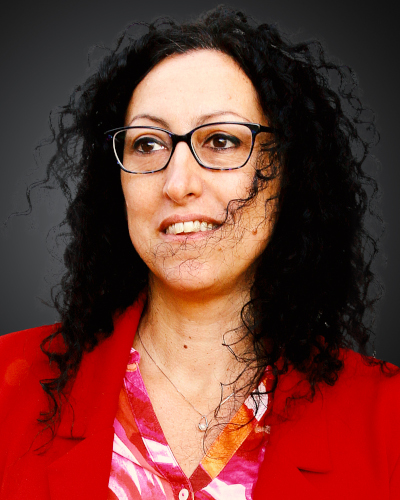 Flaviana Tagliaferri
Flaviana Tagliaferri
Mittweida University of Applied Sciences, Germany
THEMATIC SESSION DESCRIPTION
Forensic work requires tools that capture the physical world and spatial relationships accurately, document evidence comprehensively, and remain practical to operate. Immersive technologies enable reconstruction of crime scenes, human behavior, and contextual evidence as interactive 3D environments where measurements remain verifiable and investigative hypotheses can be explored and tested.
This session explores XR systems integrating technologies such as measurement systems, sensors, digital twins, and AI into environments and workflows for investigation, research, training, case presentation, and documentation. Key challenges include maintaining accuracy in virtual reconstructions, designing interfaces that support investigative thinking, scientifically validating methods for practical application, and capturing and transferring expert knowledge through immersive documentation and training platforms.
We welcome contributions presenting methods and applications for forensic contexts: reconstruction and modeling pipelines, validation frameworks, collaborative analysis tools, training systems, and interdisciplinary approaches bridging measurement science, forensics, and human-centered design.
TOPICS
Topics of interest for this Special Session in forensics include (but are not limited to):
- XR environments for forensic investigation;
- 3D reconstruction and measurement technologies (e.g., laser scanning, photogrammetry, LiDAR, medical imaging);
- Sensor fusion and data integration;
- Digital twins for forensic contexts;
- 3D modeling approaches (scenes, evidence, human models);
- AI integration and analysis;
- Video and image-based analysis;
- Interactive hypothesis testing and decision support;
- Validation and quality frameworks;
- Remote and collaborative investigation platforms;
- Systems for training and knowledge transfer;
- Human-centered design and human-machine interaction for forensic tools.
ABOUT THE ORGANIZERS
Dirk Labudde Born in 1966, he studied Theoretical Physics and Medical Physics in Rostock, Enschede, and Kaiserslautern. Since 2009, he has been Professor of Bioinformatics, and since 2014, Professor of Digital Forensics at Mittweida University of Applied Sciences. He advises state criminal police offices and public prosecutors' offices and serves as a court-recognized expert witness (General Public Prosecutor's Office of Saxony). He is an IARIA Fellow and Board Member, and a member of the Fraunhofer Institute for Secure Information Technology SIT (Mittweida Branch, Cyber Learning Lab) and the Security Thematic Network of acatech of the National Academy of Science and Engineering, Germany.
Marie Luise Heuschkel holds a B.Sc. in Anthropology from Oxford Brookes University and an M.Sc. in Forensic Science and Engineering from Brandenburg University of Technology. She is a full-time researcher in Digital Forensics at the Faculty of Applied Computer and Biosciences at Hochschule Mittweida. Pursuing her doctorate in the BMFTR NextGen qualification program, her research focuses on biometric identification from video material, combining anthropological methods with forensic analysis and digital technologies, bridging research and practical application through interdisciplinary approaches.
In 2021 Svenja Preuß earned her B.Sc. in General and Digital Forensics from Hochschule Mittweida. Since achieving a master’s degree in Forensic Sciences and Engineering from the Brandenburg University of Technology Cottbus-Senftenberg, she works actively on advancing academia in the field of digital forensic sciences. She currently works as a research associate at Hochschule Mittweida and previously held a position as an IT forensic scientist at the Fraunhofer Institute for Communication, Information Processing and Ergonomics (FKIE). Her research centers on forensic image processing and analysis, with a focus on the application of Artificial Intelligence in criminal investigations and the development of robust, practice-oriented methods for forensic evidence evaluation. With numerous publications in academic journals, and an upcoming doctorate in medical data analysis for automated facial regression using machine learning approaches, she prepares to make an exciting entry for the practical application of learned algorithms in legal practices.
Flaviana Tagliaferri graduated in 2008 with the best score in Mechanical Engineering at Tor Vergata University, Rome (Italy).
Between 2006 and 2009, she worked for IACOBUCCI HF Electronics S.p.A., a company operating in the aerospace sector.
She achieved her doctorate in 2012 at the University of Naples, Federico II (Italy). The focus of her research was on the application of statistical methods to optimize advanced manufacturing processes.
From 2012 to 2017 she worked as a research fellow at the Department of Industrial Engineering at the University of Naples, Federico II. At the same time and until 2018 she was a research associate at the Institute for Machine Tools and Production Processes (IWP) of Chemnitz University of Technology (Germany). Her focus was on innovative cutting technology. From 2018 to 2024 she was a researcher at the Mittweida University of Applied Sciences (HSMW), under the chair for Systems Electronics, and a lecturer, teaching ‘Industry 4.0 - Responsible Consumption and Production’ in the frame of the European alliance EURECA-PRO. Since October 2024 she has been an assistant professor at HSMW for Responsible Consumption and Production in the frame of the NextGen project, financed by the German Federal Ministry of Research, Technology and Space.