MONDAY OCTOBER 19, 2026 - 08:30 - 18:00
IEEE MetroXRAINE 2026 School Day
University Library • Technische Universität Chemnitz • Chemnitz, Germany
Free of charge for conference participants, TU Chemnitz students & Hochschule Mittweida students.
ABOUT THE SCHOOL DAY
The IEEE MetroXRAINE 2026 School Day is a pre-conference educational event designed to equip students, early-career researchers, and practitioners with foundational and hands-on knowledge across the four pillars of the conference: Metrology, Artificial Intelligence, eXtended Reality (XR), and Neural Engineering.
Held the day before the main conference, the School Day offers expert-led tutorials and immersive hands-on sessions in the welcoming setting of the TU Chemnitz University Library. Attendance is free for all registered conference participants and students of TU Chemnitz and Hochschule Mittweida.
PROGRAMME
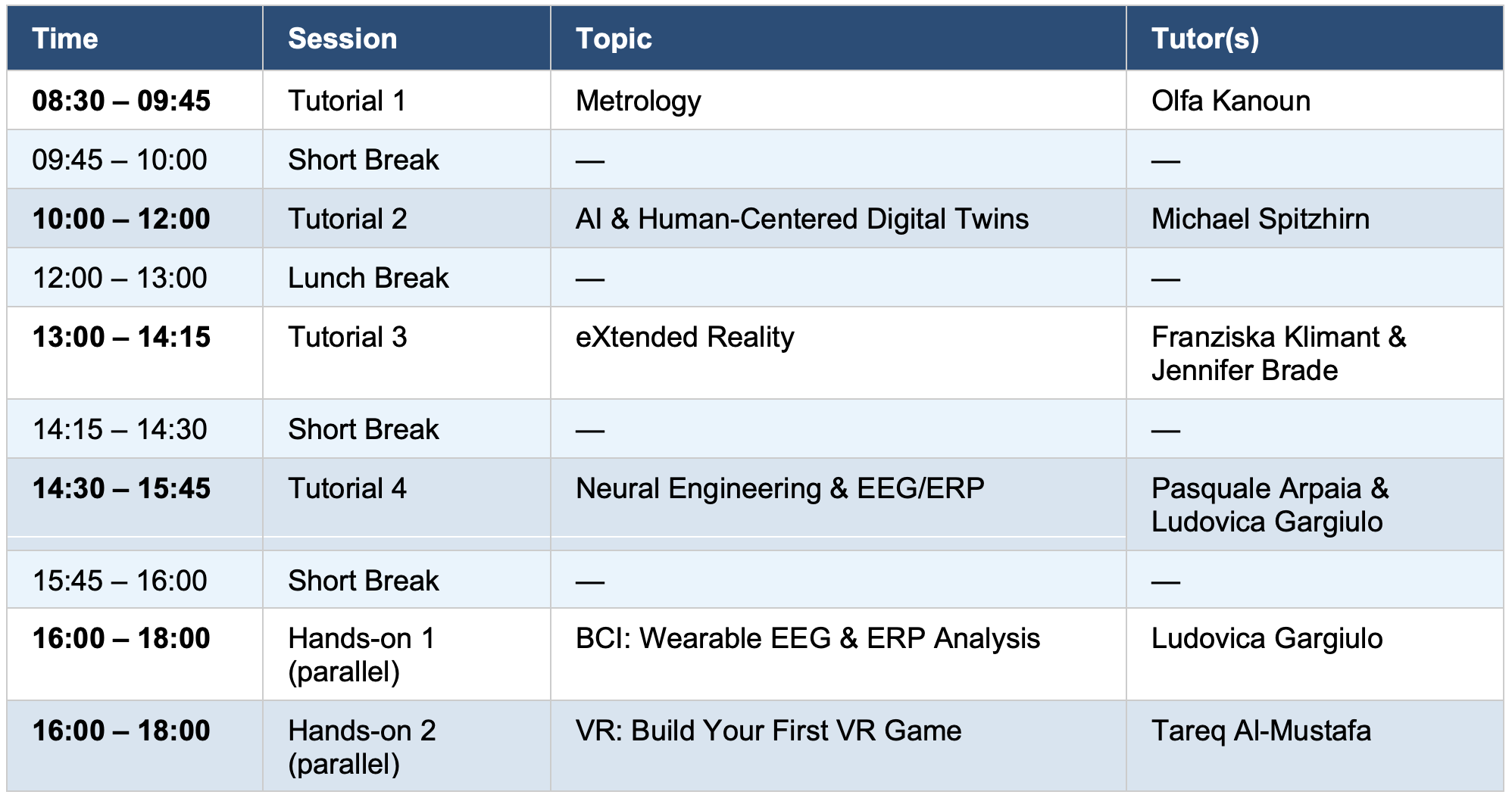
* Hands-on sessions run in parallel. Participants must choose one session. Places may be limited — pre-registration details will be announced.
TUTORIALS
Each tutorial focuses on one of the four pillars of IEEE MetroXRAINE 2026 and is designed to be accessible to graduate students and early-career researchers with a background in engineering, computer science, or a related field.
TUTORIAL 1 - METROLOGY | 08:30 – 09:45
 Olfa Kanoun
Smarter Sensor System Design Through Structure: The Hidden Key to Measurement Quality
Olfa Kanoun
Chemnitz University of Technology, Germany
ABSTRACT
Achieving high measurement quality is rarely a matter of component selection alone. The structural architecture of a sensor system, the way its elements are arranged, combined, and interconnected plays an equally decisive role in determining how errors propagate, how disturbances are rejected, and how sensitive and reliable the final measurement result truly is. Despite their proven potential, structural design principles remain insufficiently explored in many research and engineering communities. A deeper understanding of structural design opens one of the most powerful pathways to measurement excellence.
This tutorial offers a systematic and practically grounded introduction to the three fundamental sensor system structures: The chain structure, the parallel structure, and the closed-loop structure. Starting from the general measurement system model, we examine how additive and multiplicative deviations behave differently depending on the chosen structure. For each structure, we analyze error propagation behavior, identify the mechanisms available to suppress or eliminate disturbances, and discuss the practical trade-offs that guide design decisions.
Throughout the tutorial, abstract principles are anchored in concrete real-world examples of sensors. By the end of the session, participants will have both the conceptual framework and the practical intuition to make informed structural choices turning smart structures into a systematic tool for achieving superior measurement quality.
SPEAKER BIOGRAPHY
Prof. Dr.-Ing. Olfa Kanoun is Professor for Measurement and Sensor Technology at Technische Universität Chemnitz, a position she has held since 2007. She studied electrical engineering and information technology at the Technische Universität München and received her doctorate in 2001 from the University of the Bundeswehr Munich. Her thesis on calibration-free temperature measurement was awarded the research prize of the Commission of Professors in Metrology (AHMT e. V.). Her research focuses on sensors, measurement systems and methods, with expertise in impedance spectroscopy, energy harvesting, self-powered wireless sensors, and flexible polymer sensors based on nanomaterials. She is a Distinguished Lecturer of the IEEE Instrumentation and Measurement Society, co-chair of IEEE TC 34 on Nanotechnology in Instrumentation and Measurement, and founder of the annual International Workshop on Impedance Spectroscopy (IWIS). She has been recognised as one of the world’s most highly cited scientists (top 2%) since 2020. She has authored or co-authored 7 books, over 52 peer-reviewed journal papers, and more than 110 conference papers. In 2015 she received an international honour for scientific excellence from the Tunisian Ministry of Social Affairs.
TUTORIAL 2 - ARTIFICIAL INTELLIGENCE | 10:00 – 12:00
 Michael Spitzhirn
Human-Centered Digital Twins with ema: Collaborative Factory and Workplace Design using XR, AI, Omniverse and Humanoids
Michael Spitzhirn
imk Industrial Intelligence GmbH
ABSTRACT
How can factories, workplaces, and human–robot systems be designed collaboratively with their future users? In this interactive session, participants will explore the potential of digital factory and workplace planning using the ema Software Suite through practical examples from industry and construction.
Based on real-world scenarios, the session demonstrates how factories, production lines, and workplaces can be simulated, evaluated, and optimized using digital twins with regard to ergonomic, economic, and organisational criteria. Participants will gain hands-on experience with digital human models and learn how to analyse and design work processes with respect to ergonomics, productivity, and human–robot interaction.
The session also showcases how Virtual Reality (VR), Artificial Intelligence (AI), and collaborative data platforms such as NVIDIA Omniverse can support participatory planning and decision-making processes. The combination of digital twins, immersive technologies, and AI enables new approaches for the collaborative development, evaluation, and optimisation of future work environments.
The session is aimed at researchers, educators, students, and professionals from industry, construction, and human factors engineering. No prior experience with the software is required. Temporary software licences will be provided to all participants, allowing further exploration after the event.
SPEAKER BIOGRAPHY
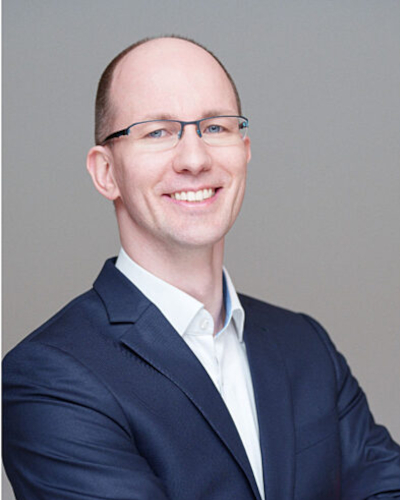
Michael Spitzhirn is a specialist in virtual ergonomics methods at imk Industrial Intelligence GmbH, with a focus on ergonomic and economic analyses, the design and optimisation of work processes, and the virtual design and evaluation of human-robot interactions. As Coordinator of Research Projects & ema Education, he is deeply involved in the development of the ema Software Suite, leads the acquisition and execution of research projects, and manages relationships with non-commercial partners including universities and research institutes. His main research interests include digital production planning, human-work design, human-robot interaction, usability, digital ergonomics, process optimisation, and MTM.
TUTORIAL 3 - EXTENDED REALITY | 13:00 – 14:15
Different technologies to interact in distributed teams
 Franziska Klimant
Franziska Klimant
Chemnitz University of Technology, Germany
 Jennifer Brade
Jennifer Brade
Chemnitz University of Technology, Germany
ABSTRACT
Working together in distributed teams becomes increasingly important in many professional contexts. Depending on the team's composition and the specific task at hand, different technologies can each play to their respective strengths. Get an hands-on overview of different technologies, e.g. telepresence robots, their specific advantages and challenges.
SPEAKERS BIOGRAPHIES
Franziska Klimant studied industrial engineering at the Chemnitz University of Technology, majoring in mechanical engineering. Since September 2008, she has been a research assistant in the field of virtual technologies at the Chair of Machine Tool Design and Forming Technology at Chemnitz University of Technology. Since April 2019, she is head of the department Process Informatics and Virtual Product Development. Her research focuses on the application of virtual and augmented reality for ergonomic and safety-related issues, as well as for education and training scenarios.
Jennifer Brade, M.Sc. has been a research associate at the Department Process Informatics and Virtual Product Development within the Chair of Production Systems and Processes at Chemnitz University of Technology since 2016. She holds a degree in Sensor Technology and Cognitive Psychology and conducts research in the field of human-machine interaction in both virtual and real-world environments. Over the past four years, her research has focused on the use and impact of telepresence technologies. In particular, she investigates how different telepresence systems are perceived by users and how remote collaboration through such systems can be effectively integrated into everyday work environments.
TUTORIAL 4 - NEURAL ENGINEERING | 14:30 – 15:45
Introduction to Electroencephalography and Event-Related Potentials: From Signal Acquisition to ERP Analysis Pipelines
 Pasquale Arpaia
Pasquale Arpaia
University of Naples Federico II, Italy
 Ludovica Gargiulo
Ludovica Gargiulo
STIIMA - CNR, Italy
ABSTRACT
Electroencephalography (EEG) is one of the most widely used non-invasive neurophysiological techniques for investigating brain activity with high temporal resolution. Among EEG-derived measures, Event-Related Potentials (ERPs) represent a powerful approach for studying sensory, cognitive, and motor processes by analysing brain responses time-locked to specific events or stimuli.
This tutorial provides an introductory yet practical overview of EEG and ERP methodologies, covering the main stages of an ERP analysis pipeline. Topics include EEG signal acquisition principles, electrode positioning systems, preprocessing procedures (filtering, artifact handling, epoching, and baseline correction), ERP averaging, and interpretation of major ERP components. Particular attention is devoted to common methodological pitfalls and to the impact of preprocessing choices on ERP morphology and latency estimation.
SPEAKERS BIOGRAPHIES
Pasquale Arpaia holds M.Sc. and Ph.D. degrees in Electrical Engineering from the University of Naples Federico II, where he is a full professor of Measurements. He is Director of the Interdepartmental Centre for Research on Health Management and Innovation (CIRMIS) and Head of several laboratories including ARHeMlab and IMPALab. He has been a Team Leader at CERN for 15 years and is a founding member of CT 324 of CEI for Brain-Computer Interface standardisation. He is General Chair of IEEE MetroXRAINE and has published approximately 480 scientific papers (Scopus), including contributions in Nature Group journals. His book on Brain-Computer Interfaces was awarded Best STEM Book of the Year by Taylor & Francis in 2024.
Ludovica Gargiulo received her M.Sc. and Ph.D. degrees in Biomedical Engineering from the University of Naples Federico II. She is currently a researcher at the Institute of Intelligent Industrial Technologies and Systems for Advanced Manufacturing (STIIMA-CNR) and collaborates with the HIMaLivE Joint Research Laboratory at the University of Naples Federico II. Her research focuses on EEG, brain-computer interfaces, and neuroengineering applications, with particular interest in EEG signal processing and event-related potentials. She co-authored a book on Brain-Computer Interfaces that received the STEM Book of the Year Award from Taylor & Francis in 2024.
HANDS-ON SESSIONS
The two hands-on sessions run in parallel from 16:00 to 18:00 and offer direct practical experience with technologies at the heart of the conference. Participants must choose one session. Places may be limited — pre-registration details will be announced on the conference website.
HANDS-ON 1 - BRAIN-COMPUTER INTERFACES | 16:00 – 18:00
Ludovica Gargiulo
Daily Wearable Brain-Computer Interfaces and Event-Related Potentials: From Signal Acquisition to ERP Analysis Pipelines
Ludovica Gargiulo
STIIMA - CNR, Italy
ABSTRACT
This hands-on session provides participants with practical experience in the analysis of EEG data with a specific focus on Event-Related Potentials (ERPs). Through guided exercises using real EEG datasets, attendees will explore the main steps of a typical ERP processing pipeline using widely adopted analysis tools. The session covers data import, channel inspection, filtering, artifact management, epoch extraction, baseline correction, ERP averaging, and visualisation of ERP components.
ABOUT THE TUTOR
Ludovica Gargiulo received her M.Sc. and Ph.D. degrees in Biomedical Engineering from the University of Naples Federico II. She is currently a researcher at the Institute of Intelligent Industrial Technologies and Systems for Advanced Manufacturing (STIIMA-CNR) and collaborates with the HIMaLivE Joint Research Laboratory at the University of Naples Federico II. Her research focuses on EEG, brain-computer interfaces, and neuroengineering applications, with particular interest in EEG signal processing and event-related potentials. She co-authored a book on Brain-Computer Interfaces that received the STEM Book of the Year Award from Taylor & Francis in 2024.
HANDS-ON 2 - VIRTUAL REALITY | 16:00 – 18:00
 Tareq Al-Mustafa
Build Your First Virtual Reality Game
Tareq Al-Mustafa
Technische Universität Chemnitz, Germany
ABSTRACT
This hands-on session is designed for students, researchers, and scientists interested in exploring Virtual Reality development. Participants will learn the fundamentals of VR game design using Unity, create an interactive virtual environment, and implement basic game mechanics such as object interaction and navigation.
No prior Unity experience is required; however, a basic understanding of programming concepts such as conditional statements is helpful. By the end of the session, attendees will have built and tested their own simple VR application, while gaining insights into the use of VR in education, research, and scientific visualisation.
ABOUT THE TUTOR
Tareq Al-Mustafa is a Research Associate and doctoral researcher in the Measurement and Sensor Technology (MST) Group at Technische Universität Chemnitz, Germany. He holds an M.Sc. in Biomedical Engineering from Jordan University of Science and Technology (JUST). His research focuses on stress detection, wearable sensing systems, and human-machine interaction, with a particular emphasis on using Virtual Reality to recreate real-life environments for scientific investigation. His work combines physiological signal processing, advanced sensor technologies, and artificial intelligence to analyse human responses in immersive virtual environments.
VENUE
The School Day will take place at the University Library of Technische Universität Chemnitz.
Address: Universitätsbibliothek Chemnitz, Straße der Nationen 62, 09111 Chemnitz, Germany