THEMATIC SESSION #40
Personalized Education in Measurement Science and Technology Empowered by Machine Learning
ORGANIZED BY
 Marco Faifer
Marco Faifer
Politecnico di Milano, Italy
 Mare Srbinovska
Mare Srbinovska
Ss. Cyril and Methodius University
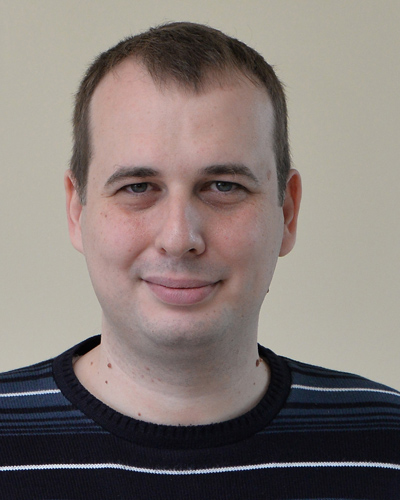 Milan R. Dinčić
Milan R. Dinčić
University of Niš
.jpg) Christian Laurano
Christian Laurano
Christian Laurano
Politecnico di Milano, Italy
THEMATIC SESSION DESCRIPTION
The Science of Measurement represents a foundational component of engineering, as it supports the design, control, and optimization of technical systems in automation, energy, industrial production, environmental monitoring, and intelligent infrastructure. In the transition toward Industry 4.0 and Industry 5.0, however, measurement no longer coincides solely with classical metrology: today it is part of ecosystems in which smart sensors, pervasive connectivity, distributed data acquisition, data analysis, and artificial intelligence enable rapid and adaptive decision-making.
In light of this, it is necessary to ask whether current university teaching in Measurement Science is truly aligned with these transformations. Traditional educational pathways continue to provide a solid foundation in quantities, instrumentation, calibration, and uncertainty analysis. This approach remains essential, but risks being insufficient when graduates are faced with cyber-physical systems, sensor networks, predictive maintenance, digital models, and data-driven analysis platforms. The issue, therefore, is not to replace the fundamentals, but to extend them toward applied competencies more closely aligned with contemporary industry.
These challenges lie at the core of the Erasmus+ project PEMS-ML whose title has also been adopted for this thematic session. In this context, the session focuses on addressing these critical issues by exploring new curriculum designs and teaching approaches within Measurement Science. Under the Education 5.0 paradigm, machine learning–driven personalized learning can be an effective solution for innovating curricula, improving teaching processes, and enhancing learning efficiency. New teaching approaches—such as flipped classrooms, collaborative learning, simulation, and game-based methods—enhanced by ML-driven personalized learning allow a stronger focus on individual needs, thereby improving the educational experience for both students and educators.
ABOUT THE ORGANIZERS
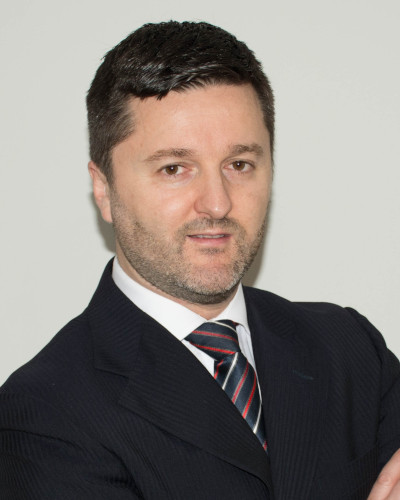
Marco Faifer was born in Bormio, Italy in 1978. He received the M.Sc. degree in electronic engineering from the Politecnico di Milano, Milan, Italy, in 2003. He received the Ph.D. degree in electrical engineering from the same university, in 2009.
He is currently associate professor in electrical and electronic measurements with the Dipartimento Elettronica, Informazione e Bioingegneria, Politecnico di Milano. His scientific activity is mainly concerned with DSP techniques and the development of industrial sensors and devices for measurement on electric systems. Moreover, he develops measurement algorithms for the characterization of electrical components and materials. He also works in the field of diagnosis for electrical devices. He is co-author of more than 50 scientific papers published on international journals, and more than 100 scientific papers published on the proceedings of national and international conferences. He is Senior Member of the IEEE, member of the Instrumentation and Measurement Society of IEEE and of the GMEE (Gruppo Misure Elettriche ed Elettroniche). He has been part of the technical program committees of the several IEEE conferences among which I2MTC and he is member of TPC of IMEKO TC10. He is member of the steering committee of IEEE ICCEP. He is a associate editor of the journal "IEEE Transactions on Instrumentation and Measurement". From academic year 2012-2013 he has taught the course "Measurement systems for industry 4.0” of the Master of Science degree in Electrical Engineering at the Politecnico di Milano.
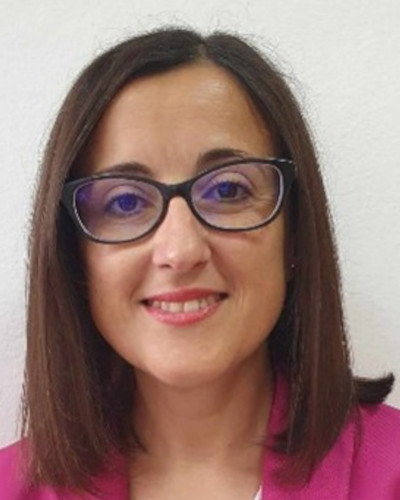
Prof. Dr. Mare Srbinovska is a full professor and Head of the Department of Electrical Measurements and Materials at the Faculty of Electrical Engineering and Information Technologies, Ss. Cyril and Methodius University in Skopje. She holds a PhD in Electrical Engineering, specializing in electrical measurements, instrumentation, and metrology. Her research focuses on sensor technologies, data acquisition systems, air quality monitoring, and the application of machine learning in measurement systems.
She has authored and co-authored numerous scientific publications in high-impact international journals and has led several national and international research projects, including Erasmus+ initiatives in personalized education and Industry 4.0 applications. Prof. Srbinovska is actively involved in teaching at all study levels and mentoring students in the field of advanced measurement systems and sensor networks.
Associate Professor Milan Dinčić, Head of the Laboratory for measurement systems, holding an MSc (2007) and 2 PhDs - in Telecommunications (2012) and Measurement Science (2017) from UNI, is an author of 1 book and 64 scientific papers (35 in reputable SCI/SCIe journals). He participated in 7 projects, leading one of them. His expertise is related to intelligent measurement systems, machine learning, IoT and data acquisition. Possesing 2 PhDs in two distinct fields equips him with the capability to address multidisciplinary challenges. Also, of special importance is his experience in advanced teaching approaches, gained by leading a project for the education advancement.
Christian Laurano was born in Lodi, Italy in 1990. He received the M.Sc. and Ph.D. degrees (cum laude) in electrical engineering from the Politecnico di Milano, Milan, Italy, in 2014 and 2018, respectively. From 2018 to 2020, he was a Post-Doctoral Researcher with the Politecnico di Milano. From 2020 to 2021, he was with the Measurement and Diagnostic Group, Transmission and Distribution Technology Department, RSE SpA. He is currently an Associate Professor with the Dipartimento di Elettronica, Informazione e Bioingegneria, Politecnico di Milano. His main research interests include innovative methods to model and characterize electrical transducers, diagnostic techniques devoted to electrical grid components, and power quality monitoring.