THEMATIC SESSION #39
Beyond Reliability: AI Impact Assessment through Human-Centric Regulation
ORGANIZED BY
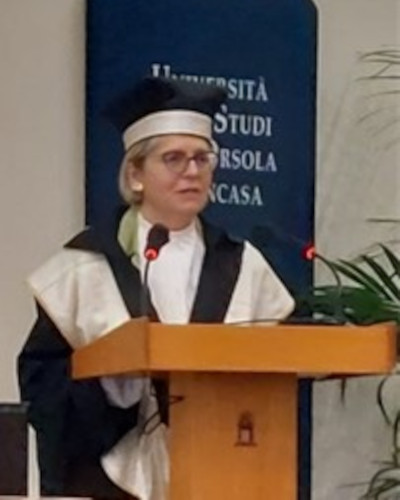 Lucilla Gatt
Lucilla Gatt
Suor Orsola Benincasa University of Naples, Italy
 Veronica Scotti
Veronica Scotti
Politecnico di Milano, Italy
 Maria Cristina Gaeta
Maria Cristina Gaeta
Suor Orsola Benincasa University of Naples, Italy
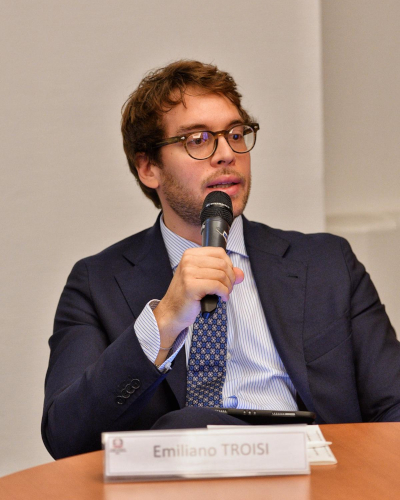 Emiliano Troisi
Emiliano Troisi
Suor Orsola Benincasa University of Naples, Italy
THEMATIC SESSION DESCRIPTION
The rapid spread and evolution of Artificial Intelligence (AI) is outlining a new scenario that calls for necessary interdisciplinary reflections to ensure the reliability required of new AI technologies and prevent harm arising from their use. In this context, the session analytically examines AI development, assessing its risks with reflections de iure condito and de iure condendo for effective legal and technical regulation. Its aim is to overcome uncertainties and issues related to new AI technologies by applying a transversal and holistic approach that highlights the positive features of artificial intelligences, enabling them not only to guarantee the necessary technical reliability but to be trusthworthy overall.
It is indeed necessary for AI technologies to adopt an anthropocentric and biocentric perspective, ensuring respect for the fundamental rights guaranteed to human beings and other living entities. To this end, the session's focus is on measurement techniques—both preventive to AI development and contextual or subsequent to commercialization—to evaluate and monitor its performance, thereby verifying its concrete impact on human beings and living beings in general. This is a topic involving numerous stakeholders due to both the breadth of sectors affected by AI and the voluntary and mandatory regulations (AI Act) that require the involvement of certification and accreditation bodies for complete conformity and compliance assessment.
The investigation's focus is to identify parameters, indicators, methods, and measurement techniques (including semi-automatic ones) that concretely enable the definition and quantification of the risk of impact of AI systems across different fields of application, in conformity with international and European regulations on the matter. This starts from the Council of Europe’s Framework Convention on Artificial Intelligence and Human Rights, Democracy, and the Rule of Law, the European Union’s Artificial Intelligence Act, and international standards, also considering technical regulations and their updates useful for integrating legal provisions.
ABOUT THE ORGANIZERS
Lucilla Gatt is a full Professor of Private Law, European Technologies Law and Family Law since 2006 at Suor Orsola Benincasa University of Naples (Italy), as well as Director of the Research Centre in European Private Law - ReCEPL (founded 2016). She holds a PhD in Private Law (Bologna University, 1998); Fulbright Scholar (Chicago Law School, 2001). Lawyer since 2000, admitted to practice before the superior Italian supreme courts.
Her research topics are focused on European private law, privacy, AI law, digital assets, biotechnologies, space law, green law and animal rights. She founded UNISOB’s postgraduate Data Protection Law program (2016) and an undergraduate specialisation in Law & technology at the same university. Member of PhD councils at UNISOB and Sapienza, supervisor of numerous PhD students in Italy and abroad.
Coordinator of the Jean Monnet Centre of Excellence ReCEPL4STAI (2026–2028); Chair holder of the Jean Monnet Chair PROTECH (2019–2022); Module leader of a Jean Monnet Chair on European Contract Law (2005–2008); member of multiple Jean Monnet projects.
She is an editor and author of monographs and articles in multiple languages on privacy, AI, platforms, satellite data and technology-related rights. Coordinator on EU and national projects including CREA3 (2024–2026), TAtoDPR (2017–2019), PROCULTHER-NET (2022-2023), REFERENCES (2024-2025) and LeDiBank (2020-2022).
Founder and Editor-in-Chief of the open-access European Journal of Privacy Law and Technologies (EJPLT) and ReCEPL Series on innovation and sustainability law; deputy editor and committee member of multiple scientific journals; referee for several international journals.
Prof. Gatt is a member of the AI Expert Group of the National Bar Council (since 2024); a member of Italy’s National Open Science Table (since 2023); expert hearings before the Italian Senate Justice Commission and AgID. Holder of numerous Erasmus professorships and international fellowships. She won several awards, including Gaetano Salvatore (2023) and Gianbattista Vico (2024) prizes.
Veronica Scotti is a lawyer based in Milan and, since 2007, has served as a contract professor at Politecnico di Milano, teaching the legal implications of engineers' professional liability.
Since 2024, she has been a member of UNI's (Italian National Standards Body) Technical Committee 052 on Conformity Assessment. Since 2022, she has served on the Metrology Committee of the Milan Order of Engineers and as a member of its disciplinary board. She is also a member of the AI working group established by the Milan Order of Engineers and collaborates with Politecnico di Milano's LExMEtroAI Lab on the development of metrics for artificial intelligence.
She is a member of the American Academy of Forensic Sciences (AAFS).
She has participated in various metrology-related projects at both national (e.g., PRIN 2022) and international levels (e.g., European Commission legal study verifying the transposition of metrology directives—including those on measuring and non-automatic weighing instruments—across all EU Member States).
Her research focuses on the interplay between measurement activities, metrology, and regulation, with particular emphasis on the legal implications of incorrect specification of measurement uncertainty. She has published over 30 papers in journals and conference proceedings and is co-author of the book Forensic Metrology (Springer, 2022).
She is responsible for legal metrology columns in the journal of the Italian Association of Electrical and Electronic Measurements (GMEE) and IEEE Transactions on Instrumentation and Measurement.
Maria Cristina Gaeta is an Appointed Lecturer in Private Law and ICT Law, at Suor Orsola Benincasa University of Naples (Italy), as well as the Scientific Secretary of the Research Centre in European Private Law (ReCEPL) at the same University.
Since 2024 she serves on Technical Committee 324 on BCI of the Italian Electrotechnical Committee (CEI).
Since 2016, Dr Gaeta has been a member of the Interdepartmental Research Centre Scienza Nuova and the Napolitan section of the Academy of European Private Lawyers. From 2020 she joined the High Observatory on European Policies (AOPE) and since 2021 is a member of the Interdepartmental Research Centre for Bioethics (CIRB) at the of Federico II University.
She is key staff and Senior Advisor for the Jean Monnet Centre of Excellence ReCEPL4STAI (2026–2028) and has held teaching and leadership roles in multiple Jean Monnet projects (NextGEUOrder, EUGREENEXT, PROTECH, EURA). She participates in several research projects, including CREA3, TAtoDPR, REFERENCES, LadiBank and PRILeD.
Her research focuses on regulation of robotics and artificial intelligence, particularly on BCI, smart and green transport, sustainable AI. She authored a monograph on autonomous vehicle regulation and numerous articles in Italian and English on European technology law, and AI law.
Dr Gaeta coordinates the Referee and Editorial Board of the European Journal of Privacy Law & Technologies (EJPLT) and serves on editorial boards of different scientific Journals.
She is an active conference speaker and won multiple prizes and scholarships, including EURA Young Scholar Prize (2022) and Law & Tech ECLT Prize (2021). She was visiting professor at Salamanca University (2024), Heidelberg University (2022), RifaS (2020), IALS and Queen Mary University (2017–2020).
She is an active conference speaker and won of multiple prizes and scholarships, including EURA Young Scholar Prize (2022), best paper IEEE MetroXRAINE (2022), and Law & Tech ECLT Prize (2021). She holds a PhD in Private Law (Federico II University, 2018) and is a civil lawyer (since 2018).
Emiliano Troisi holds a PhD (Doctor Europaeus) in Private Law from Suor Orsola Benincasa University of Naples (Italy), with a specialisation in the interaction and integration between humanities and advanced technologies. He served as a Postdoctoral Research Fellow in Private Law at the same university (a.y. 2025–2026) and at the IISS, Naples (a.y. 2023–2024). He holds teaching and teaching assistant positions in Private Law and Law of New Technologies at Suor Orsola Benincasa University of Naples and LUISS University of Rome. Since 2018, he has been affiliated as a Senior Researcher with the Research Centre in European Private Law (ReCEPL) at Suor Orsola Benincasa University of Naples (Italy). His research focuses on data protection, AI and new technologies law, contract automation, and sustainability. He participates in several national and international research projects on digital transformation, artificial intelligence, and sustainable innovation. He has published several articles and scientific contributions in his fields of research and regularly participates as a speaker in national and international conferences. He is a member of the Editorial Board of the European Journal of Privacy Law & Technologies (EJPLT) and Diritto di Internet. He is also a member of the JurAI Consortium – Working Group on Jurimetrics and Artificial Intelligence – within the Artificial Intelligence Advisory Board (AIAB) of the CEPEJ (Council of Europe, Strasbourg).