THEMATIC SESSION #38
Artificial Intelligence, Ethics and Intellectual Property in Cultural Heritage
ORGANIZED BY
 Veronica Scotti
Veronica Scotti
Politecnico di Milano, Italy
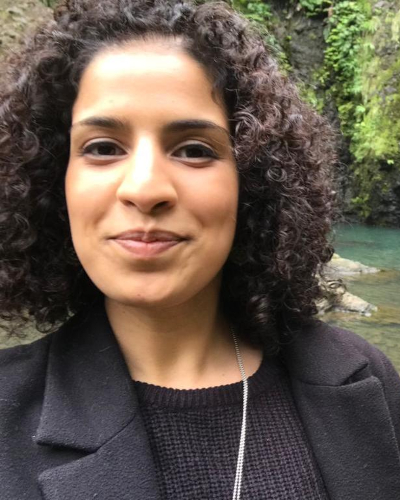 Leila Es Sebar
Leila Es Sebar
University of Turin, Italy
THEMATIC SESSION DESCRIPTION
Recent advancements in artificial intelligence (AI) have opened unprecedented opportunities for the cultural heritage field. AI enables the analysis of large historical datasets, uncovering patterns, and insights that might otherwise remain hidden. It also enhances efficiency in tasks such as cataloging and organizing extensive cultural collections, supporting the management of heritage resources for current and future generations.
In parallel, the rapid development of advanced digitization techniques, such as photogrammetry, 3D scanning, multispectral and hyperspectral imaging, has transformed how cultural heritage is documented, studied, and accessed. These digital replicas form the foundation for many AI-driven applications, but also raise critical ethical and legal questions concerning data ownership, authenticity, long-term preservation, reuse, and the relationship between original artifacts and their digital replicas.
However, integrating AI into cultural heritage raises complex ethical and legal questions. These include issues of authenticity, subjectivity, interpretive bias in AI-generated or reproduced works, and authorship or intellectual property concerns. Current scholarship has yet to fully address these context-sensitive ethical challenges.
This session provides an interdisciplinary forum for researchers, conservators, data scientists, ethicists, and legal experts to explore how to develop and deploy trustworthy, responsible AI in cultural heritage. It will examine both the opportunities AI offers and the risks that must be managed, including ethical, legal, and governance aspects, with attention to data management, intellectual property, and human-centered decision-making.
TOPICS
We welcome original contributions on topics including but not limited to:
- AI for analysis, cataloging, interpretation, and management of cultural heritage data;
- Digitalization of cultural heritage: photogrammetry, 3D scanning, and advanced imaging techniques;
- Ethical considerations: authenticity, subjectivity, bias, explainability, accountability;
- Intellectual property and authorship of digital assets, including AI-generated and digitally reconstructed works;
- Ethical and legal implications of digital replicas and virtual representations of heritage assets;
- Governance, trust, and responsible deployment of AI in heritage contexts;
- Data management, access, reuse, and long-term sustainability in AI-driven and digital heritage applications;
- Interdisciplinary approaches combining technical, ethical, legal, and heritage perspectives;
- Case studies from real-world AI and digitalization applications in cultural heritage.
ABOUT THE ORGANIZERS
Veronica Scotti is a lawyer based in Milan and, since 2007, has served as a contract professor at Politecnico di Milano, teaching the legal implications of engineers' professional liability.
Since 2024, she has been a member of UNI's (Italian National Standards Body) Technical Committee 052 on Conformity Assessment. Since 2022, she has served on the Metrology Committee of the Milan Order of Engineers and as a member of its disciplinary board. She is also a member of the AI working group established by the Milan Order of Engineers and collaborates with Politecnico di Milano's LExMEtroAI Lab on the development of metrics for artificial intelligence.
She is a member of the American Academy of Forensic Sciences (AAFS).
She has participated in various metrology-related projects at both national (e.g., PRIN 2022) and international levels (e.g., European Commission legal study verifying the transposition of metrology directives—including those on measuring and non-automatic weighing instruments—across all EU Member States).
Her research focuses on the interplay between measurement activities, metrology, and regulation, with particular emphasis on the legal implications of incorrect specification of measurement uncertainty. She has published over 30 papers in journals and conference proceedings and is co-author of the book Forensic Metrology (Springer, 2022).
She is responsible for legal metrology columns in the journal of the Italian Association of Electrical and Electronic Measurements (GMEE) and IEEE Transactions on Instrumentation and Measurement.
Leila Es Sebar received her bachelor's degree in Materials Science and Technology from the Università degli Studi di Torino, Italy, in 2015 and her M.S. degree in Materials Science for Cultural Heritage from the Università degli Studi di Torino, Italy, in 2018. She received her Ph.D. in Metrology at the Politecnico di Torino (XXXIV cycle) in 2022.
Her research activities deal with the study and development of a multi-analytical measurement approaches for the characterization of materials in the biomedical field and in the field of conservation assessment of cultural heritage artifacts. She is interested in the investigation and application of different techniques, such as X-ray fluorescence, Raman spectroscopy, electrochemical impedance spectroscopy, photogrammetry, and multispectral imaging.
She is a member of Technical Committee 24 of IMEKO (IMEKO TC24), IEEE Instrumentation and Measurement Society, AIM (Associazione Italiana di Metallurgia), GMEE (Gruppo Misure Elettriche ed Elettroniche), AIar (Associazione Italiana di Archeometria) and CHNet (Cultural Heritage Network) of Istituto Nazionale di Fisica Nucleare (INFN).