THEMATIC SESSION #17
Intelligent Wearable Sensor Systems for AI-Driven Health and Activity Monitoring
ORGANIZED BY
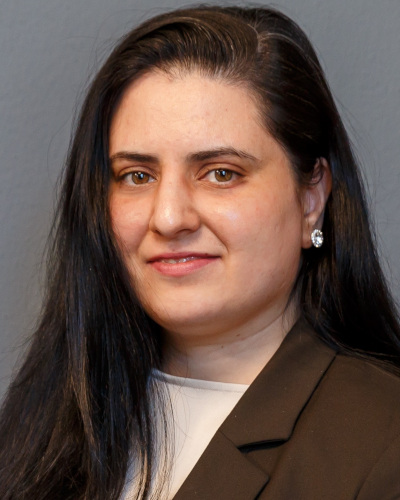 Rim Barioul
Rim Barioul
Chemnitz University of Technology
 Hiba Hellara
Hiba Hellara
Chemnitz University of Technology
 Oumaima Bader
Oumaima Bader
Chemnitz University of Technology
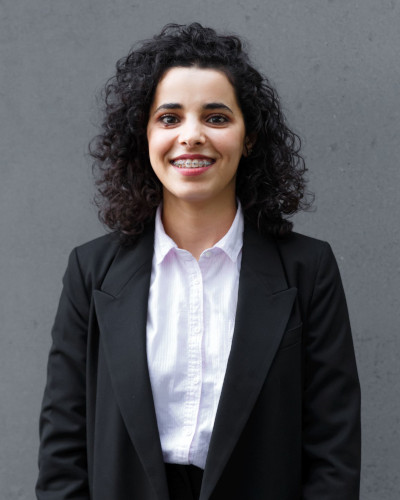 Oumayma Kahouli
Oumayma Kahouli
Chemnitz University of Technology
THEMATIC SESSION DESCRIPTION
Recent advances in sensing technologies, embedded systems, and artificial intelligence have enabled a new generation of intelligent smart wearable devices capable of continuous and unobtrusive monitoring of human health and activity. These systems integrate multimodal biosignal acquisition, wireless communication, and on-device analytics to support personalized health assessment, early anomaly detection, and real-time feedback in everyday environments.
This thematic session aims to bring together researchers working on the design, development, and evaluation of intelligent wearable sensor systems for AI-driven health and activity monitoring. The session focuses on end-to-end solutions that combine advanced sensing hardware, robust signal processing, and machine learning–based interpretation to transform raw physiological and behavioral data into clinically relevant and human–machine interaction–oriented insights.
Contributions addressing system integration, sensor fusion, edge intelligence, data quality assurance, and user-centered design are especially encouraged. Furthermore, the session seeks to highlight approaches for validating, benchmarking, and ensuring the reliability, robustness, and explainability of AI-driven wearable technologies in health-related and human–machine interface applications.
By fostering interdisciplinary exchange between experts in sensor technology, biomedical engineering, artificial intelligence, and human-centered system design, this session aims to advance the development of trustworthy and scalable wearable monitoring solutions. The outcomes of this session are expected to support next-generation digital health services, preventive medicine, and personalized well-being management within the broader context of Industry 5.0 and Health 5.0.
ABOUT THE ORGANIZERS
Dr. Rim Barioul is a Postdoctoral Researcher and the Group Leader of the Smart Wearables research group at the Professorship of Measurement and Sensor Technology, Technische Universität Chemnitz, Germany. She completed at TU Chemnitz in 2021, where her doctoral research focused on machine learning–based methods for hand gesture recognition and human–machine interaction using myographic data. Dr. Barioul’s research interests encompass machine learning, embedded systems, gesture recognition, feature selection, and intelligent wearable sensor systems, with a particular focus on integrating advanced signal processing and machine learning methods for real-time interpretation of physiological data. She has contributed to numerous publications in these areas and plays an active role in advancing wearable technologies that support health and activity monitoring applications.
Dr.-Ing. Hiba Hellara is a Postdoctoral Researcher and Project Manager for Smart Wearables at the Professorship of Measurement and Sensor Technology, Technische Universität Chemnitz, Germany. She completed her Ph.D. in a cotutelle program between TU Chemnitz and ENET'Com Tunisia in 2024, where her doctoral research focused on electromyography-based muscle force estimation and adaptive classification methods for rehabilitation applications. Dr. Hellara's research interests include wrapper-based swarm intelligence algorithms for feature selection, multi-modal sensor fusion (sEMG, FMG, IMU), hand gesture recognition, muscle fatigue assessment, and the investigation of physiological and lifestyle factors (such as caffeine intake, diet, and behavioral patterns) affecting muscle activity and biosignal quality. She has contributed to several publications advancing adaptive machine learning frameworks that enable real-time gesture recognition across heterogeneous populations. She also plays an active role in managing international research collaborations between German and Tunisian institutions, particularly in wearable sensor technologies for rehabilitation therapy and prosthetic control applications.
Dr.-Ing. Oumaima Bader is a Postdoctoral Researcher in the Smart Wearables group at the Professorship of Measurement and Sensor Technology, Technische Universität Chemnitz, Germany. She received her Diploma in Mechatronic Engineering from the National Engineering School of Sousse, Tunisia, in 2020 and earned her Ph.D. in 2025 from TU Chemnitz. Her doctoral research focused on Electrical Impedance Tomography (EIT) for lung imaging, with particular emphasis on numerical analysis and advanced mesh modeling techniques. In particular, her work focused on enhancing EIT performance through the design of current injection patterns to improve the detectability of lung anomalies and increase measurement sensitivity. Dr. Bader’s research interests include biomedical signal and image processing, computational modeling, and finite element analysis. She has contributed to several publications on human thorax modeling and phantom design and is involved in interdisciplinary research aimed at advancing wearable and sensor-based technologies for lung monitoring.
Oumayma Kahouli is a PhD candidate and AI researcher at TU Chemnitz, Germany, specializing in federated and decentralized learning for privacy-sensitive and heterogeneous environments. Her research investigates how distributed model training can balance fleet-wide generalization with on-device personalization, with applications in medical imaging, biomedical signal processing, and edge IoT systems. A central aspect of her work is the design of hybrid aggregation schemes for federated architectures, notably a transformer-based federated system for EMG gesture recognition that achieves robust cross-device performance while preserving user-level adaptation. She also serves as Co-Chair of IEEE Women in Engineering (WIE) Germany Section and Treasurer of the IEEE Student Branch at TU Chemnitz.