THEMATIC SESSION #31
Data-driven and modelling approaches in human neuroscience and neuroengineering: applications to neuroimaging
ORGANIZED BY
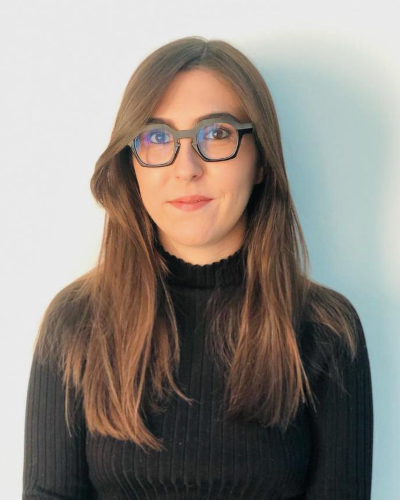 Valentina Bordin
Valentina Bordin
Politecnico di Milano, Italy
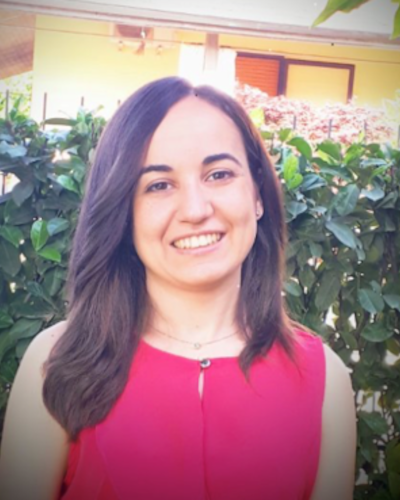 Stefania Coelli
Stefania Coelli
Politecnico di Milano, Italy
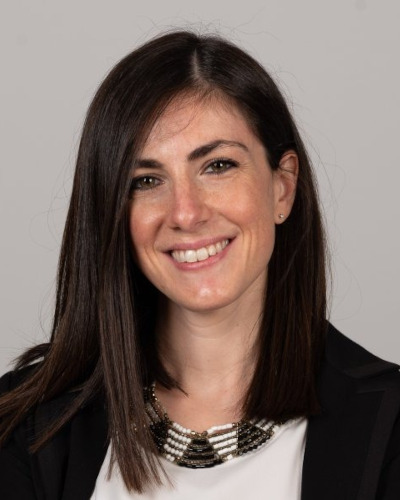 Eleonora Maggioni
Eleonora Maggioni
Politecnico di Milano, Italy
THEMATIC SESSION DESCRIPTION
The field of human neuroscience is undergoing a paradigm shift, driven by rapid advancements in data acquisition, management, dissemination, and comprehension.
The use of data-driven and modelling approaches greatly impacts on the study of the brain and nervous system in many ways. Specifically, machine learning, deep learning and statistical learning algorithms are used to extract knowledge from structural or functional neural data in the form of signals or images. This special session aims to shed light on how recent advances in data-driven neuroengineering can transform the management of brain and nervous system disorders and neuroscientific discoveries.
Methodological trends, advances, and criticalities in the field of data-driven analysis and modelling of neuroimaging data will be presented to discuss their potential in the study of the central nervous system.
TOPICS
We welcome original contributions on topics including but not limited to:
- Machine Learning, Deep Learning, and Statistical Learning applied to neuroscience;
- Modelling approaches for Neural Signal and Image Processing;
- Multimodal integration of electrophysiological and neuroimaging techniques;
- Neurological disease stratification/classification;
- Psychiatric disorder stratification/classification;
- AI for medical decision support;
- Cognitive/emotional state identification and classification.
ABOUT THE ORGANIZERS
Valentina Bordin obtained her Master's degree in Biomedical Engineering from Politecnico di Milano, Italy, in 2019. In 2024, she completed her Ph.D. cum laude in Bioengineering at Politecnico di Milano, with a thesis titled "Methodologies to improve the role of White Matter Hyperintensities as neuroimaging biomarker of Alzheimer's disease." She currently holds a Postdoctoral Researcher position at Politecnico di Milano, where she is also active as an academic teaching assistant.
Her research focuses on neuroimaging analysis and the development of computational methods for the study of neurodegenerative diseases, with emphasis on automatic segmentation of white matter lesions, harmonisation of imaging-derived measures, and the application of explainable artificial intelligence to neuroimaging data.
Dr. Bordin has built a strong international profile rooted in her research stay at the Oxford Centre for Functional MRI of the Brain, one of the world's leading neuroimaging groups, where she worked on the harmonisation of large-scale neuroimaging databases. This collaboration has since evolved into active participation in a European working group uniting researchers from Oxford, Cardiff, Lisbon, Leuven, Lausanne, and Caen, dedicated to standardising neuroimaging methodologies and analytical pipelines for neurodegenerative diseases. In parallel, she is actively involved in the development of advanced quantitative MRI approaches for characterising white matter damage in pediatric leukodystrophies, in close collaboration with Ospedale dei Bambini Buzzi in Milan.
Her work has appeared in international peer-reviewed journals including NeuroImage and NeuroImage Clinical, and has been presented at major venues including the IEEE EMBC and ISMRM Annual Meetings. She also serves as an ad-hoc reviewer for several international journals and has co-advised thesis works across both Politecnico di Milano and Università degli Studi di Milano. Her research has been recognised with the QuanTIM PhD Student Award for methodological excellence and societal relevance in early-career research.
Stefania Coelli earned her PhD in Bioengineering from Politecnico of Milano in 2019 and carried out her postdoctoral research at the Department of Electronics, Information and Bioengineering (DEIB) in the B3Lab - Biosignals, Bioimaging, Bioinformatics Laboratory (www.b3lab.deib.polimi.it) . She has been visiting post-doc researcher at the Institute of Systems Neuroscience (INS) in Marseille. Currently she is Assistant Professor in Bioengineering at the Politecnico di Milano. At the B3Lab her research deals with the study of physiological signals to study the central and the autonomic nervous system, whit main interest in the application of new analysis techniques to understand and model brain network dynamics.
Eleonora Maggioni obtained a PhD in Biomedical Engineering with honours from Politecnico di Milano in 2014. Following a PostDoc fellowship at the Dept. of Neurosciences and Mental Health at the Fondazione IRCCS Ca' Granda Ospedale Maggiore Policlinico in Milan, since 2022 she is an assistant professor of Bioengineering at the Politecnico di Milano and an affiliated researcher at Fondazione Policlinico. During her research career, she has been Principal Investigator or Unit Leader for six research projects funded by prestigious Italian and international institutions. Her research activity has resulted in over 90 international, peer-reviewed publications and an H-index of 24. She is in the Editorial Board of the Scientific Reports journal from the Nature portfolio. She has been co-chair organizer of the special session “Trends and perspectives in artificial Intelligence for neural signal and image processing” and TPC member for the IEEE Metroxraine 2024. She is a member of the IEEE, EMBS, and EURASIP scientific societies.