THEMATIC SESSION #24
Advances in Affective Computing and Social Interaction Technologies
ORGANIZED BY
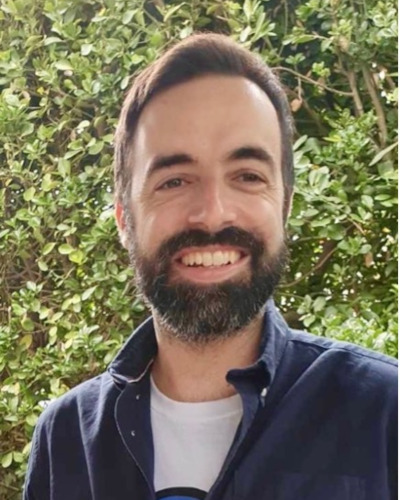 Alberto Greco
Alberto Greco
University of Pisa, Italy
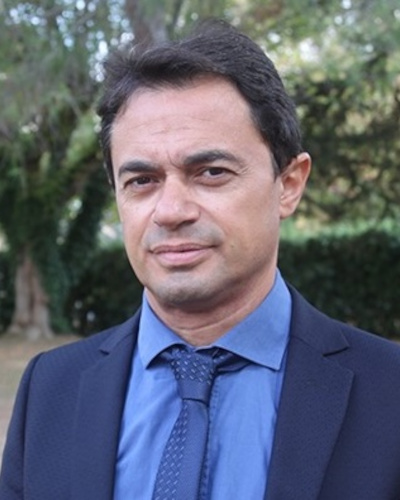 Enzo Pasquale Scilingo
Enzo Pasquale Scilingo
University of Pisa, Italy
 Sergio Frumento
Sergio Frumento
University of Pisa, Italy
 Alejandro Luis Callara
Alejandro Luis Callara
University of Pisa, Italy
THEMATIC SESSION DESCRIPTION
This thematic session aims to bring together researchers working on recent advances in affective computing and technologies designed to sense, model, and support social interaction processes.
Modern technologies increasingly rely on computational models to interpret, mimic, and respond to users’ affective and social states. Recently, affective computing field has evolved beyond discrete emotion recognition toward the continuous estimation of internal states, adaptive human–machine interaction, and the quantitative modeling of interpersonal dynamics.
Therefore, this session will focus on methodological, technological, and application-oriented advances across the full methodological pipeline in affective computing — from sensing hardware to modelling, validation, and adaptive systems.
TOPICS
Topics of interest include, but are not limited to:
- Wearable and embedded technologies for continuous affective and social monitoring;
- Acquisition systems and preprocessing methodologies for physiological and multimodal data and images;
- Hyperscanning acquisition frameworks and analysis methods;
- Advanced signal processing and feature extraction for emotional and social state estimation;
- Machine learning and deep learning approaches for affective modeling;
- Modeling of continuous affective trajectories and latent internal states;
- Interpersonal physiological synchrony analysis;
- Computational and dynamic models of social interaction;
- Virtual, augmented, and mixed reality systems for affective modulation and social training;
- Adaptive architectures and biofeedback systems to foster social interaction;
- Human–robot and human–machine interaction driven by affective and social state modeling.
Particular attention will be given to contributions addressing methodological rigor, reproducibility, robustness, and performance assessment in both controlled and ecologically valid settings.
By fostering dialogue between engineers, computer scientists, psychologists, and clinicians, the session aims to advance the development of reliable, scalable, and socially impactful affective and social interaction technologies.
ABOUT THE ORGANIZERS
Alberto Greco (Senior Member, IEEE) is an Associate Professor at the Department of Information Engineering, University of Pisa, and a member of the “E. Piaggio” Research Center. He coordinated the PRIN project BRAVE and co-coordinated the H2020 project POTION. His research focuses on physiological signal analysis and modeling, machine learning, and wearable systems, with applications in affective computing, social interaction, and mental health. He has authored over 150 scientific publications and co-founded CARTESIA s.r.l. to develop AI-based solutions for emotional support and well-being.
Enzo Pasquale Scilingo (Senior Member, IEEE) received the PhD degree. He is a full professor in electronic and information bioengineering with the University of Pisa. He coordinated the European projects “PSYCHE”, “NEVERMIND”, and “POTION”. His main research interests are in wearable monitoring systems, human-computer interfaces, biomedical and biomechanical signal processing, modeling, control, and instrumentation. He is the author of more than 300 papers on peer-review journals, contributions to international conferences, and chapters in international books.
Sergio Frumento is a Postdoctoral Researcher in Biomedical Engineering at the Department of Information Engineering, University of Pisa. He received his M.Sc. degree in Applied Cognitive Psychology from the University of Bologna and his Ph.D. in Psychophysiology from the University of Pisa. His research focuses on adaptive virtual reality systems for exposure therapy in anxiety-related disorders (e.g., social anxiety, phobias, PTSD) and on the neural and psychophysiological mechanisms underlying adaptive and maladaptive emotional processes, consciousness, and perception.
Alejandro Luis Callara (Member, IEEE) is a Tenure-Track Assistant Professor at the University of Pisa and a member of the Research Center “E. Piaggio.” He earned his Ph.D. in Information Engineering in 2019. His research bridges bioengineering and neuroscience, developing computational models and advanced analytical frameworks for biomedical signals and imaging. His work focuses on brain connectivity, physiological causal interactions, and the neural correlates of consciousness, combining machine learning and statistical modeling to investigate EEG, fMRI, and autonomic dynamics. He has contributed to several major national and international projects, including THE, H2020 POTION, SENSEI (HBP), and PRIN BRAVE.