THEMATIC SESSION #22
Wearable Biosensing and Artificial Intelligence for Personalized Healthcare
ORGANIZED BY
 Michela Russo
Michela Russo
University of Naples Federico II, Naples, Italy
 Martino Giaquinto
Martino Giaquinto
University of Salerno, Italy
 Simone Bove
Simone Bove
University of Salerno, Italy
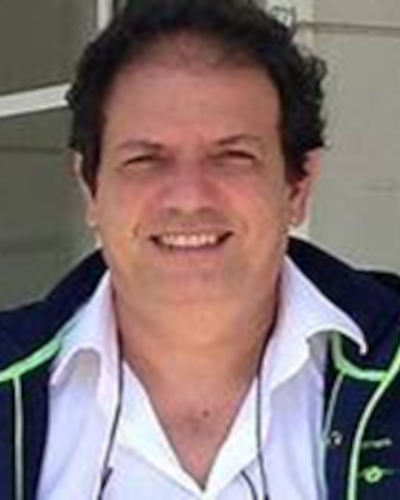 Francesco Amato
Francesco Amato
University of Naples Federico II, Naples, Italy
THEMATIC SESSION DESCRIPTION
Wearable biosensors are redefining the landscape of healthcare measurement by enabling real-time, continuous, and non-invasive acquisition of physiological signals. These systems are not only advancing personalized medicine, but also raising fundamental metrological challenges related to accuracy, traceability, uncertainty quantification, and the standardization of biosignal measurements. They enable novel insights into biomedical data, physiological systems, healthcare management, telemedicine, clinical engineering, ergonomics, and rehabilitation.
The convergence of wearable sensing technologies with Artificial Intelligence (AI) is opening unprecedented opportunities. AI-driven data analytics enables real-time pattern recognition, anomaly detection, and predictive modeling, while also supporting advanced platforms for data visualization, rehabilitation, remote diagnostics, and human–machine interaction. In this context, the Internet of Medical Things (IoMT) acts as a distributed measurement infrastructure, enabling interoperable, networked, and context-aware healthcare systems.
This thematic session aims to bring together researchers and experts in the fields of biosensors, Artificial Intelligence, edge computing, and health data security to explore innovations in wearable technologies for personalized healthcare, disease management, and rehabilitation.
TOPICS
Topics of interest for this Thematic Session include (but are not limited to):
- AI in Biomedical Application;
- Rehabilitation Engineering;
- Telemedicine;
- Clinical Engineering;
- Smart biomedical sensors;
- Ergonomics;
- Biomechanical Risk Assessment;
- Wearable health monitoring systems;
- Physiological signal processing algorithms;
- Low-power edge computing for digital health;
- Energy-efficient embedded systems;
- Real-time health data analytics;
- AI-driven healthcare monitoring;
- Internet of Medical Things (IoMT);
- Remote patient monitoring;
- Personalized digital healthcare.
ABOUT THE ORGANIZERS
Michela Russo is a post-doc researcher in biomedical engineering at Department of Chemical, Material and Industrial Production Engineering, University of Naples FEDERICO II, Naples, Italy. Her main scientific areas involve biomedical signal processing, artificial intelligence, simulation and extended reality in healthcare. Her current research is directed toward the gait analysis in extended reality with attention to neurodegenerative diseases. She is the author and co-author of several publications, and she was a speaker at national and international conferences.
Martino Giaquinto earned his Master’s Degree cum laude in Electronic Engineering in 2014 from the University of Naples Federico II (Italy) and his Ph.D. in Information Technologies for Engineering in 2018 from the University of Sannio (Italy).
His doctoral research has been awarded the “PhD Thesis Award” by the Italian Society of Electronics. From 2018 to 2022, he worked as a Postdoctoral Researcher at the University of Sannio and as a Senior Researcher at the Regional Center for Information and Communication Technology (CeRICT). From 2022 to 2024, he served as an Assistant Professor of Bioengineering at the Department of Information and Electrical Engineering and Applied Mathematics (DIEM), University of Salerno, where he currently holds a Tenure-Track Assistant Professor position and serves as delegate for incoming student orientation.
His research interests include wearable biosensors and intelligent systems for early diagnosis and clinical decision support, with a particular focus on brain signal analysis for diagnostic applications, brain–computer interfaces in rehabilitation settings, and advanced control of prosthetic hands.
He is the author of approximately 40 publications in scientific journals and conference proceedings and serves as a reviewer for several journals in the fields of bioengineering and nanotechnology.
Simone Bove is a Ph.D. student in Information Engineering at University of Salerno, Italy. He received his Master’s Degree in Information Engineering for Digital Medicine from the University of Salerno in 2024.
His research focuses on biomedical signal processing and Brain-Computer Interfaces (BCIs), with particular emphasis on EEG-based motor imagery paradigms. His work explores the design and application of deep learning methods to decode brain activity, aiming to improve the performance and reliability of BCI systems for rehabilitation applications.
Francesco Amato was born in Naples, in February 1965. He received the Laurea and the Ph.D. degrees in electronic engineering from the University of Naples, in 1990 and 1994, respectively. From 2001 to 2003, he was a Full Professor in automatic control with the University of Reggio Calabria. In 2003, he moved to the University of Catanzaro as a Full Professor in automatic control. From 2010 to 2018, he was a Full Professor in Bioengineering. At the University of Catanzaro, he has been the Dean of the School of Computer and Biomedical Engineering, the Coordinator of the Doctorate School in Biomedical and Computer Engineering, and the Director of the Biomechatronics Laboratory. In 2018, he moved to the University of Naples Federico II as a Full Professor in Bioengineering, where he is currently the Dean of the School of Biomedical Engineering. The scientific activities he has developed in the fields of systems and control theory, of computational biology, and of the modeling and control of biomedical systems. He has published more than 370 papers in international journals and conference proceedings and three monographies, two with Springer Verlag and one with Wiley. He has coordinated and reviewed various projects at national and international level and regularly works as a consultant for various companies.