THEMATIC SESSION #02
Beyond Distance: Immersive Telepresence, Telecooperation, Telehaptics, and Remote Control in Next-Generation XR Systems
ORGANIZED BY
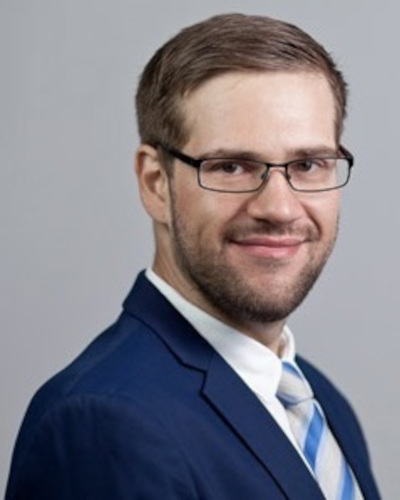 Mario Lorenz
Mario Lorenz
Technische Universität Chemnitz
 Jennifer Brade
Jennifer Brade
Technische Universität Chemnitz
 Franziska Klimant
Franziska Klimant
Technische Universität Chemnitz
THEMATIC SESSION DESCRIPTION
This thematic session explores the interdisciplinary advancements enabling immersive telepresence, telecooperation, telehaptics, and remote control within next-generation XR ecosystems. As remote interaction becomes essential across industry, healthcare, scientific exploration, and hazardous-environment operations, new challenges arise in achieving reliable, high-fidelity, and measurable multisensory communication between humans and machines at a distance.
The session invites contributions addressing measurement principles, performance validation, latency mitigation, multisensory synchronization, and quality-of-experience assessment for teleoperated and collaborative systems. Central topics include haptic communication channels, XR interfaces, multimodal perception, and human-in-the-loop control strategies that enhance user awareness, embodiment, and precision during remote manipulation and shared tasks.
The session particularly welcomes interdisciplinary applications—ranging from industrial inspection and manufacturing to medicine, rehabilitation, cultural heritage, and environmental monitoring.
By integrating perspectives from metrology, XR technology, neural science, and AI, this session aims to strengthen the theoretical foundations and practical deployment of robust telepresence systems, enabling seamless, safe, and effective collaboration across physical distances.
ABOUT THE ORGANIZERS
Mario Lorenz holds a master degree in computer science and a PhD in medical sciences. Since 2011 he is researching human factor in XR applications focusing on training and support systems in the industrial and medical context, at Chemnitz University of Technology. He specializes in haptic simulation for medical applications.
Jennifer Brade is a scientific assistant at the Professorship Production Systems and Processes, Chemnitz University of Technology, specializing in human-machine-interaction within virtual and telepresence environments. Her work focuses on improving situational awareness in these settings to enhance work efficiency and effectiveness in immersive digital environments.