THEMATIC SESSION #01
Intelligent Interfaces and Cognitive Technologies for Challenging Real-World Scenarios
ORGANIZED BY
 Michael Kuhl
Michael Kuhl
Mittweida University of Applied Sciences, Germany
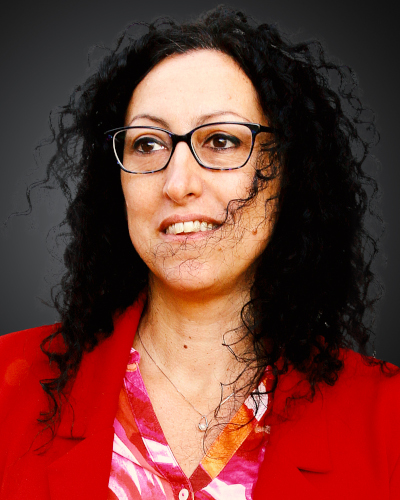 Flaviana Tagliaferri
Flaviana Tagliaferri
Mittweida University of Applied Sciences, Germany
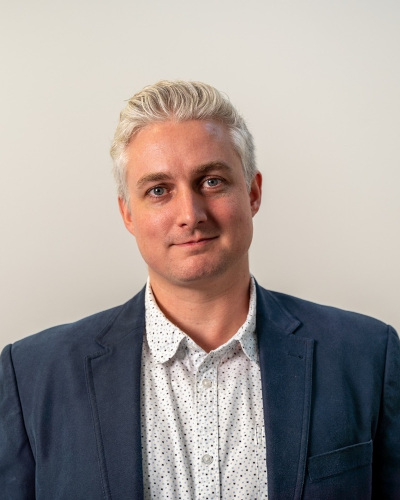 Maurice Rekrut
Maurice Rekrut
German Research Center for Artificial Intelligence (DFKI)
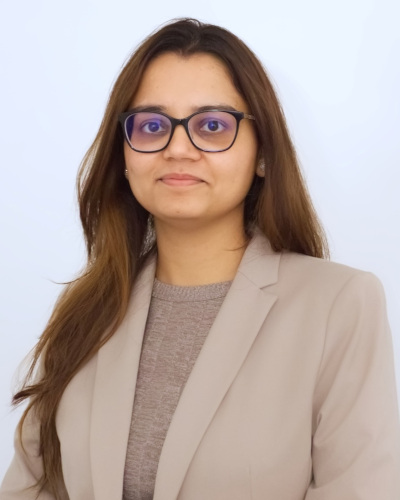 Mansi Sharma
Mansi Sharma
German Research Center for Artificial Intelligence (DFKI)
THEMATIC SESSION DESCRIPTION
In complex and high-risk contexts—spanning from industrial production workflows to emergency response operations—effective human-machine interaction (HMI) plays a fundamental role in ensuring safety, supporting decision-making, and improving operational performance. This thematic session aims to investigate how advanced technologies, such as Brain-Computer Interfaces (BCIs), extended reality (XR), artificial intelligence (AI), and sensor systems, can be combined to enhance HMI in demanding scenarios.
We welcome contributions that showcase recent advancements in HMI technologies designed to strengthen situational awareness, extend human capabilities, and enable seamless collaboration between people and automated systems. This includes not only BCIs but also adaptive user interfaces, multimodal interaction approaches, and intelligent systems that assist with critical tasks. Potential applications cover areas such as mobility (e.g., logistics and transportation), industrial production (e.g., smart manufacturing), and emergency management (e.g., disaster response).
The session will emphasize how these technological developments support human operators in fast-paced, high-pressure environments, promoting safer and more efficient workflows while improving resilience in unpredictable conditions. By fostering more effective cooperation between humans and machines, these innovations have the potential to transform how we manage complex, high-stakes situations in real-world settings.
TOPICS
Topics of interest for this Special Session include (but are not limited to):
- Human-Machine Interaction;
- Artificial Intelligence for HMI;
- Artificial Intelligence for safety;
- Intelligent Sensor System for Safety;
- Smart feedback actuator;
- Decision Support Systems based on AI;
- Innovative sensor system for hazard evaluation;
- Virtual and augmented reality for hazard evaluation;
- Wearable sensors for safety.
ABOUT THE ORGANIZERS
Michael Kuhl studied Electrical Engineering at TU Chemnitz and TU Delft, starting in 1991 and graduating in 1996 with research investigations at the Delft Institute of Microsystems and Nanoelectronics. From 1996, he worked as a development engineer in the electronics industry before moving to research at the Fraunhofer Gesellschaft in 2001. In 2003 ,he established the group of Process Informatics at the Fraunhofer Institute for Machine Tools and Forming Technology. His work was focused on quality and process monitoring in production technology. After achieving his doctorate in 2010, he became the Head of the Main Department of Production Technology at the Professorship for Machine Tools and Forming Technology at TU Chemnitz. In 2012, he became the Managing Chief Engineer for Research and Development at Fraunhofer IWU, and since January 2015, he has been the Division Director for Strategy and International Affairs.
Since 2017, he has been a Full Professor at Mittweida University of Applied Sciences (HSMW). His Chair for Systems Electronics is engaged in the development of electronic systems for production engineering and ambient assisted living. Since 2019, he has been the Dean of Studies of the Bachelor's degree in Electrical Engineering Automation at the HSMW. Since 2024, he has been the Dean of Faculty Engineering Sciences at the HSMW.
Flaviana Tagliaferri graduated in 2008 with the best score in Mechanical Engineering at Tor Vergata University, Rome (Italy).
Between 2006 and 2009, she worked for IACOBUCCI HF Electronics S.p.A., a company operating in the aerospace sector.
She achieved her doctorate in 2012 at the University of Naples, Federico II (Italy). The focus of her research was the application of statistical methods to optimize advanced manufacturing processes.
From 2012 to 2017, she worked as a research fellow at the Department of Industrial Engineering at the University of Naples, Federico II. At the same time and until 2018, she was a research associate at the Institute for Machine Tools and Production Processes (IWP) of Chemnitz University of Technology (Germany). Her focus was on innovative cutting technology. From 2018 to 2024, she was a researcher at the Mittweida University of Applied Sciences (HSMW), under the chair for Systems Electronics, and a lecturer, teaching ‘Industry 4.0 - Responsible Consumption and Production’ in the frame of the European alliance EURECA-PRO. Since October 2024, she has been an assistant professor at HSMW for Responsible Consumption and Production in the frame of the NextGen project, financed by the German Federal Ministry of Research, Technology, and Space.
Maurice Rekrut is a senior researcher at the German Research Center for Artificial Intelligence (DFKI). He graduated in Biomedical Engineering at the University of Applied Sciences Saarland (HTW Saarland) with focus on Neural Engineering and received his MSc in 2013. Since then, he has been working as a full-time researcher at DFKI in the Cognitive Assistants research department. His research is concerned with non-invasive Brain-Computer Interfaces (BCIs) and their applicability in real-world use cases. Since 2020 he is the head of the Cognitive Assistants BCI-lab at DFKI Saarbrücken, where established BCI concepts are revised with respect to integration into practical applications and new methods are developed to extend and improve existing BCI paradigms. One focus is on the recognition of imagined and spoken speech with EEG-based BCIs which was also the topic of his PhD in Computer Science which he received in 2023 from Saarland University.
Mansi Sharma is a full-time researcher at the German Research Center for Artificial Intelligence (DFKI) and Ph.D. student at Saarland University. She received her MSc degree in Computer Science from Saarland University in 2020. Her primary research focuses on human intent recognition and multimodality interaction, especially with non-invasive Brain-Computer Interfaces (BCIs). She participated in several BCI competitions and was awarded first prize in Imagined Speech Classification hosted by the International Winter Conference on Brain-Computer Interfaces.