THEMATIC SESSION #20
Continuous Health Monitoring in Free-Living Conditions: From Multi-Parametric Sensing to Actionable Digital Biomarkers
ORGANIZED BY
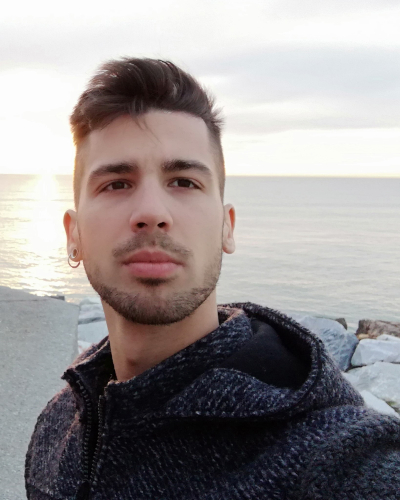 Gianluca Rho
Gianluca Rho
University of Pisa, Italy
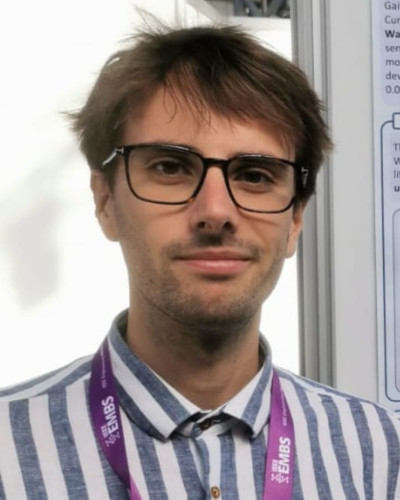 Michele Zanoletti
Michele Zanoletti
National Research Council, Institute of Clinical Physiology, Pisa, Italy
THEMATIC SESSION DESCRIPTION
The transition from episodic clinical assessments to continuous health monitoring in unsupervised, "free-living" environments represents a paradigm shift in modern medicine. While wearable devices have reached high levels of accuracy in controlled settings, their application in daily life introduces significant challenges related to signal artifacts, data continuity, and patient adherence.
This thematic session invites contributions that bridge the gap between raw sensor data and clinical insight, embracing the philosophy of proactive and personalized care. We are particularly interested in methodologies and technologies designed for the longitudinal monitoring of vital signs and behavioral patterns in patients with chronic complex conditions (e.g., cardiovascular, respiratory, neurodegenerative, or metabolic diseases) as well as the aging population.
The session focuses on the entire data pipeline: from non-obtrusive sensing hardware capable of operating in noisy environments, to robust signal processing techniques for artifact removal, up to Artificial Intelligence and Machine Learning models for the early detection of physiological anomalies and the prediction of acute events. Contributions are welcome on topics including, but not limited to, multi-sensor data fusion (physiological, environmental, and behavioral), quality assessment of data collected in uncontrolled settings, and the validation of digital biomarkers for remote patient management.
The ultimate goal is to discuss how engineering solutions can move beyond simple tracking to become reliable decision support systems for clinicians, improving quality of life and reducing hospitalization risks.
TOPICS
Topics of interest for this Thematic Session include (but are not limited to):
- Advanced signal processing and deep-learning techniques for artifact removal, motion compensation, and signal quality assessment in unsupervised scenarios;
- Machine Learning tools for Predictive Health: Algorithms for early warning systems, detection of clinical deterioration, and disease progression modeling in chronic care;
- Multimodal Sensor Fusion: Integration of data from wearables, medical devices, and contextual/environmental sources for a holistic patient assessment;
- Novel hardware solutions for non-invasive and unobtrusive monitoring (e.g., smart textiles, patch sensors, contactless monitoring, ingestibles);
- Algorithms for functional assessment in Daily Life: physical activity and gait metrics, energy expenditure, sleep metrics, and behavioral patterns;
- System design and Data Ecosystems: Interoperability, edge-computing strategies, and data security for continuous remote patient monitoring platforms.
ABOUT THE ORGANIZERS
Gianluca Rho received his Ph.D. degree in Biomedical Engineering from University of Pisa in 2023. He is currently a post-doctoral researcher of Biomedical Engineering at the Department of Information Engineering, University of Pisa.
His research primarily focuses on biomedical signal processing and modeling of EEG activity and connectivity, electrodermal activity, electrocardiography and photoplethysmography, wearable devices and their application for the estimation of relevant physiological parameters in the field of affective computing and personalized medicine.
In addition to his research, he is actively involved in teaching undergraduate and graduate courses in Biomedical Engineering at the University of Pisa, covering topics such as biomedical instrumentation, digital signal processing, and Android Java programming.
Michele Zanoletti received the Specialist degree in biomedical engineering from The University of Pavia, in 2019. He is currently pursuing the Ph.D. degree in information engineering with the University of Pisa. He was a Research Fellow with The University of Pavia, from 2019 to 2022.
He is with the Institute of Clinical Physiology, National Research Council. His research interests include the processing of biomedical signals and artificial intelligence algorithms applied to medicine.