THEMATIC SESSION #18
Human–Device Interaction in Assistive Technologies for People with Diverse Abilities
ORGANIZED BY
 Maura Casadio
Maura Casadio
University of Genoa, Italy
 Ludovica Gargiulo
Ludovica Gargiulo
STIIMA, National Research Council of Italy (CNR)
 Lorenzo Masia
Lorenzo Masia
Munich Institute for Robotics and Machine Intelligence (MIRMI), Technical University of Munich (TUM)
 Laura Fiorini
Laura Fiorini
University of Florence, Italy
THEMATIC SESSION DESCRIPTION
This thematic session aims to bring together researchers, engineers, and clinicians working on assistive technologies designed to support people with neurodegenerative and neurological conditions, such as amyotrophic lateral sclerosis, multiple sclerosis, cognitive decline, Parkinson's disease, and related disorders.
The session focuses on human–device interaction paradigms that enable communication, control, and autonomy in the presence of severe motor and/or speech impairments. Particular attention is given to interaction mechanisms based on physiological and neural signals, including but not limited to EEG-based interfaces, electromyography, eye tracking, biosignals, and residual motor activity.
Contributions addressing multimodal and adaptive assistive systems are especially welcome, including solutions that combine multiple signals to improve robustness, reliability, and personalization across different stages of disease progression. Topics of interest include signal acquisition and processing, feature extraction, classification and decoding methods, and real-time feedback strategies.
The session also welcomes works on emerging assistive platforms, such as assistive robotics and robotic manipulation, smart environments, XR-based interfaces, and embodied or conversational agents. Submissions on robot-assisted activities of daily living, shared autonomy, safe human–robot interaction, and adaptive control strategies for progressive impairments are encouraged, with a focus on how interaction design choices impact usability, cognitive workload, user acceptance, and long-term use in daily life.
ABOUT THE ORGANIZERS
Maura Casadio is a biomedical engineer and Professor of Biomedical Robotics and Rehabilitation Engineering at the University of Genoa. She has worked at the Rehabilitation Institute of Chicago and Northwestern University. Her work lies at the intersection of engineering and neuroscience, focusing on the development of innovative technological solutions for sensory and cognitive rehabilitation, including robotic systems and neuroengineering approaches to enhance motor learning and recovery.
Ludovica Gargiulo received her M.S. degree in Biomedical Engineering from the University of Naples Federico II in 2020 and her Ph.D. in Information and Communication Technology for Health from the same university. She currently works at the Institute of Intelligent Industrial Technologies and Systems for Advanced Manufacturing. Her research focuses on Brain–Computer Interfaces for assistive technologies and advanced biomedical signal processing.
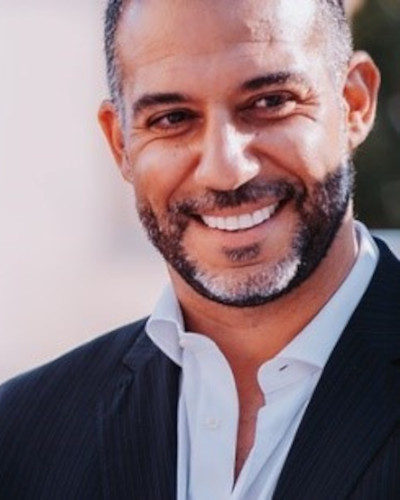
Lorenzo Masia is Professor of Intelligent BioRobotic Systems at the Technical University of Munich, where he also serves as Executive Director of the Munich Institute for Robotics and Machine Intelligence (MIRMI).
His research focuses on biorobotics, robot-aided rehabilitation, wearable robotics, and human–robot interaction. He previously held academic positions at Nanyang Technological University, the University of Twente, and Heidelberg University, where he founded the ARIES Lab dedicated to assistive robotics and interactive exosuits.
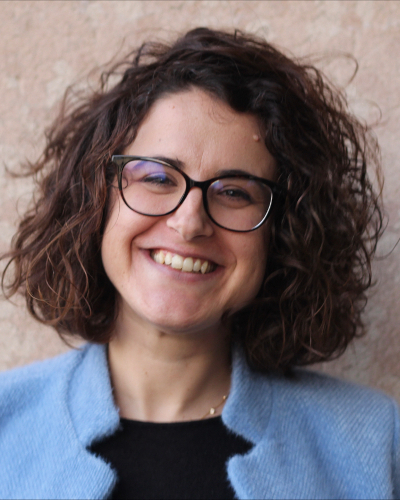
Laura Fiorini is an Assistant Professor at the University of Florence, Department of Industrial Engineering. Her research focuses on assistive robotics, human–robot interaction, and intelligent systems for healthcare applications. She is particularly engaged in the development of socially assistive robots and digital technologies designed to support older adults and individuals with cognitive impairments, including dementia.
Her work integrates engineering, artificial intelligence, and clinical needs to design user-centered technological solutions aimed at enhancing autonomy, quality of life, and rehabilitation outcomes.